+1 (860) 406 1782
  Golf Kitchen Website Official
  • HOME
  • ABOUT
  • INSIDE GK
    • Latest Issue
    • NEWS
    • The Anniversary Collection
    • Recipes
    • Dessert Delight
    • GK Golf Bar
    • The Club Wine Review
    • Certification
    • Health and Wellness
    • Exclusive Chef Interviews
    • PURVEYOR SPOTLIGHT
    • Non for Profits
    • Galleries
    • Events
    • Press / Media
  • BLOG
  • Contact
  • Buy Book
  • HOME
  • ABOUT
  • INSIDE GK
    • Latest Issue
    • NEWS
    • The Anniversary Collection
    • Recipes
    • Dessert Delight
    • GK Golf Bar
    • The Club Wine Review
    • Certification
    • Health and Wellness
    • Exclusive Chef Interviews
    • PURVEYOR SPOTLIGHT
    • Non for Profits
    • Galleries
    • Events
    • Press / Media
  • BLOG
  • Contact
  • Buy Book

Following the Path to Private Club Chefdom

2/16/2024

1 Comment

 
Picture
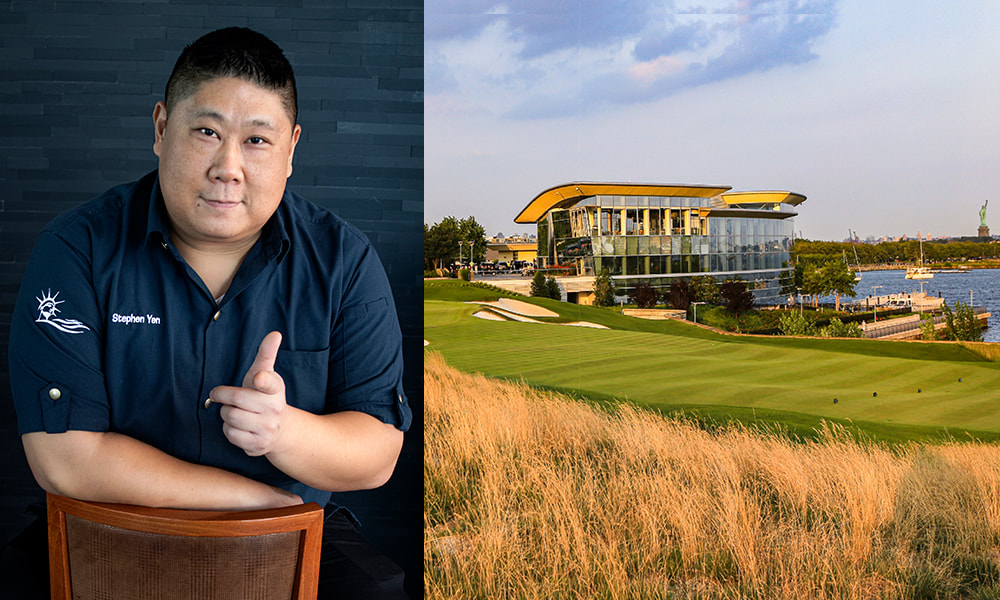
Left: Stephen Yen, Executive Chef at Liberty National Golf Club \ Right: The View of the Clubhouse from the 18th  hole. 

from Restaurant Chef to Commanding a Private Club Kitchen is not Without Forks in the Road
​

The transition from restaurant chef to private club chef may be a slippery slope, with a few surprises and revelations along the way.

Stephen Yen is a renowned restaurant chef and a graduate of the French Culinary Institute (ICC) who successfully transitioned to the club industry. For the past two seasons, he has served as Executive Chef of Liberty National Golf Club, one of the finest golf properties in the country. In this wide-ranging interview, Stephen shares how he overcame the often-tricky transition from the restaurant to the club industry. 


GK: Liberty National is one of the finest golf properties in the country, with many influential members, including captains of industry and celebrities. What was your journey to land this position?

Transitioning from a restaurant to a golf or country club can be challenging. Although many restaurants have frequent customers or “regulars,” for the most part, it’s new people customers coming in to dine each day or evening. In a typical restaurant, you can predict how much product you will need each night, but in a club, it’s different. One of my biggest hurdles was determining what the members wanted and preferred. It wasn’t just about having a menu and saying no to requests for items not listed. I had to be accommodating and flexible, even if it meant sourcing ingredients that were not usually kept on hand. 

Managing inventory and ensuring everything was fresh was challenging, but getting to know the members was even more critical. I had to become highly engaged with them to learn their tastes and anticipate their needs. In doing so, I asked questions—lots of questions—and checked in often regarding their dining experiences. By doing so, I was able to build strong relationships and provide better service.

In the restaurant kitchen, I was used to the same ingredients, measurements, and techniques. It was familiar and while comfortable, it also limited my creativity.

I have grown to love cooking for the members at Liberty National. Success comes from being open to their input and feedback. Flexibility is key. Members may have a favorite pasta sauce, but prefer an alternative type of  pasta. Or they may have a special recipe they want me to try out. Whatever it is, I’m willing to listen and adjust. It’s 

Another learning curve is timing. In a club kitchen, there can be a great deal of waiting. Then, all the golfers come in simultaneously. There may be no dinner reservations; minutes later, a member shows up with 12 guests, and we’re creating a last-minute wine dinner. I need to know our wines in-house; we must have the glasses polished and the food and wine pairings perfected in minutes.

In a club kitchen, making use of downtime is crucial. I’ve learned to make sauces, create rubs for different meats, and prep marinades, so we are ready to go. You don’t know when you’ll get hit hard with diners, so you must have the ammunition at the ready!  

GK: How did you build your team? 

Assembling a team was challenging. I inherited some staff who were familiar with the club and its kitchen. Then, I hired restaurant staff who had to learn new skills and adapt to a new environment. Additionally, the club’s location in Jersey City made it difficult for some potential employees to commute, as public transportation options are limited. 

During interviews, I had to be careful not to ask questions regarding the mode of transportation and to use specific wording to ensure we remained legally compliant. We’ve been able to overcome this challenge by establishing and utilizing carpools. We’ve built a great team here, and I am proud of the hard work they put in every day.

GK: What are some drawbacks of working in a club setting? 

Although working in a club setting is rewarding, some drawbacks exist. For example, even if an employee loves the job, they may be laid off after just eight months due to seasonality, which can be a significant source of stress and uncertainty. This is especially true for cooks and dishwashers who may need more financial stability and a steady, year-round income stream.

GK: How did you address this issue?

I hire part-time staff from local New Jersey restaurants to help ensure that everyone has enough work to keep them financially afloat. Having the right approach and mindset can also be a rewarding and fulfilling experience for everyone.

GK: How do you keep the camaraderie in the kitchen, especially for a seasonal club?

Camaraderie in the kitchen is crucial, especially in a seasonal club like Liberty National. I foster a team mentality by encouraging open communication, supporting each other, and celebrating small victories. We have regular team meetings to discuss challenges and successes and work together to find solutions. I also recognize exceptional work and show appreciation for my team’s efforts. By creating a positive and supportive environment, we can collaborate seamlessly and efficiently, even during the busiest times of the year.

GK: What advice do you have for restaurant chefs wishing to transition to a club position? What are the positives and negatives? 

I advise restaurant chefs wishing to consider a club position to trail a club chef for more than one day; this holds true for any management role. When you first assume the position, you’ll think of many changes that must be made. Breathe…and spend some time observing before implementing positive changes that include everyone’s input.

Chefs may find that the line-level employees and the members resist change. I recommend planting the seeds and letting them grow organically. If you come out swinging, the whole equilibrium of the kitchen will be disrupted. Listen to the employees about members’ requests and gain insights as to what food and beverages they enjoy.

​The positive elements of being a club chef are better hours than my last restaurant, where the kitchen closed at 2 am. The negative aspects would be the off-season or downtime, which isn’t a negative for everyone. Some, like me, who worked in a New York City kitchen, are used to going 100 miles per hour year-round!

Picture
The view from the 14th hole. Image courtesy Liberty National Golf Club
1 Comment
Michael Chandler link
2/17/2024 07:03:17 am

Great piece. I experienced much of the same.

Reply


Leave a Reply.

    Picture
    Picture
CONTACT  
TERMS AND CONDITIONS
​​PRIVACY POLICY
​
COPYRIGHT 2024